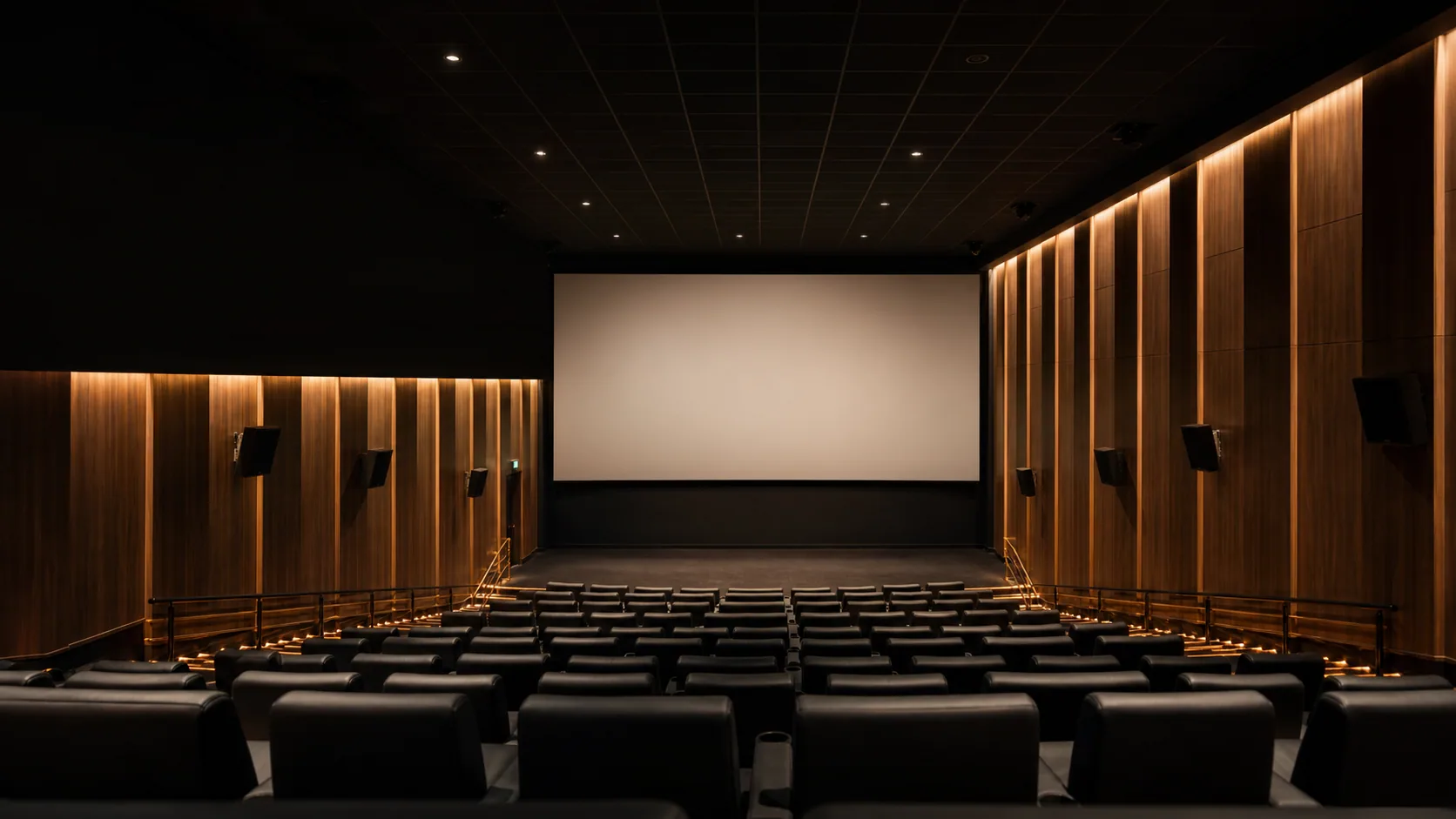
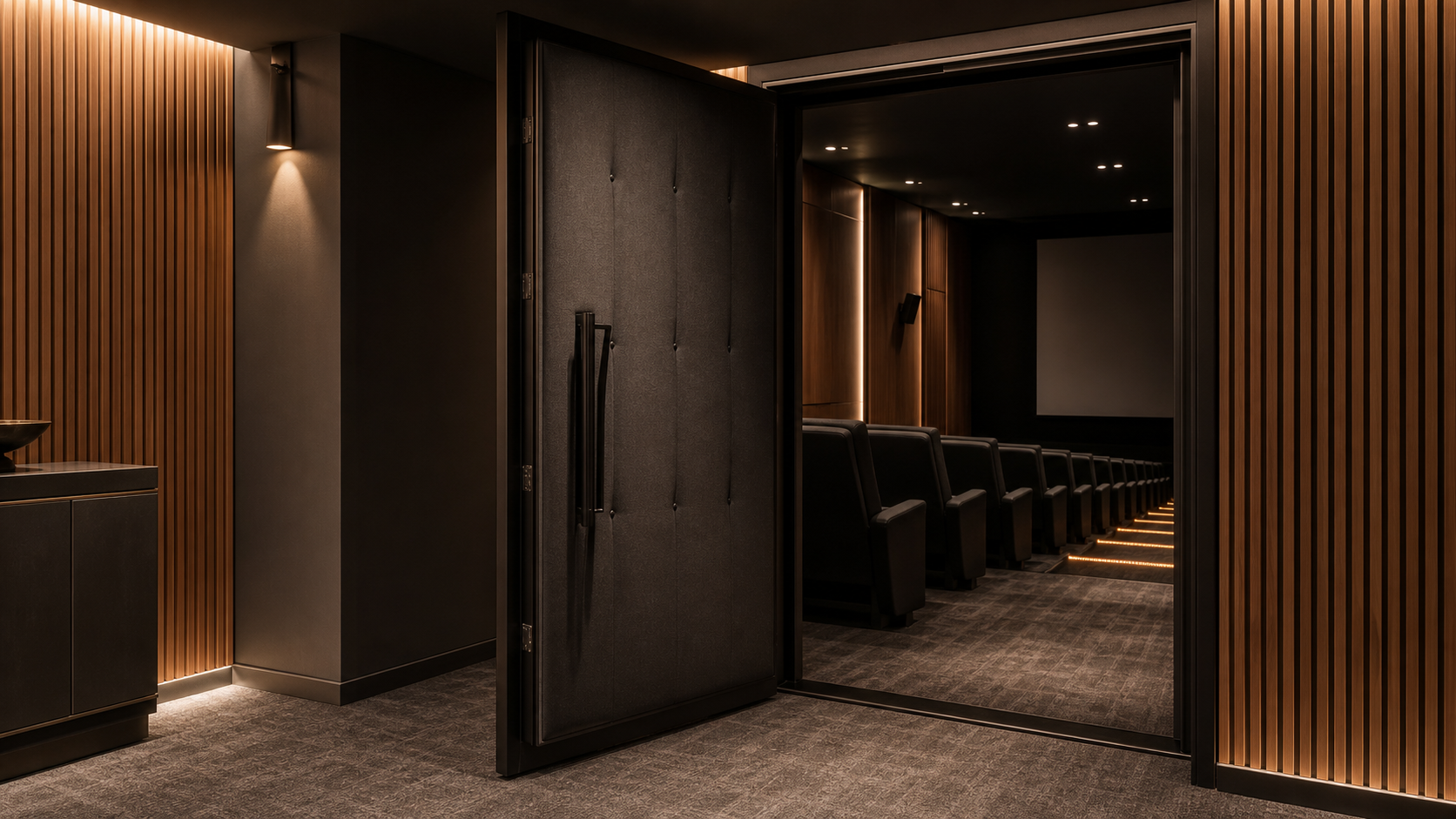
01Screen-led room planningAcoustic comfort at every seat
01 / DESIGN INTENT
Every audience member should hear the soundtrack as it was meant to be heard.
We shape the room around the screen, the programme and the audience experience—then coordinate the surfaces, loudspeaker interfaces and technical boundaries that keep unwanted sound under control.
01
Project brief & resilience
Set the venue grade, design life, fire strategy and future technical flexibility at the outset. Major screen, projection, sound and public-display systems should be coordinated with the approved project brief and current local requirements.
02
Clear operational planning
Separate audience, staff, service, pedestrian and vehicle flows. Plan illuminated egress, fire access, plant locations, parking, drainage, energy use and landscape works as one coordinated site strategy.
03
Uncompromised clarity
Control echoes, flutter, focusing and resonance while protecting direct soundtrack energy. Equipment, projection and external noise must not interfere with the auditorium experience.
04
Buildable material logic
Pair visual finish with acoustic function: absorptive screen and rear zones, calibrated lateral treatment, controlled ceiling coverage and detailing that avoids vibration at loudspeaker supports.
02 / SCREEN-FIRST PLANNING
The screen defines the room.
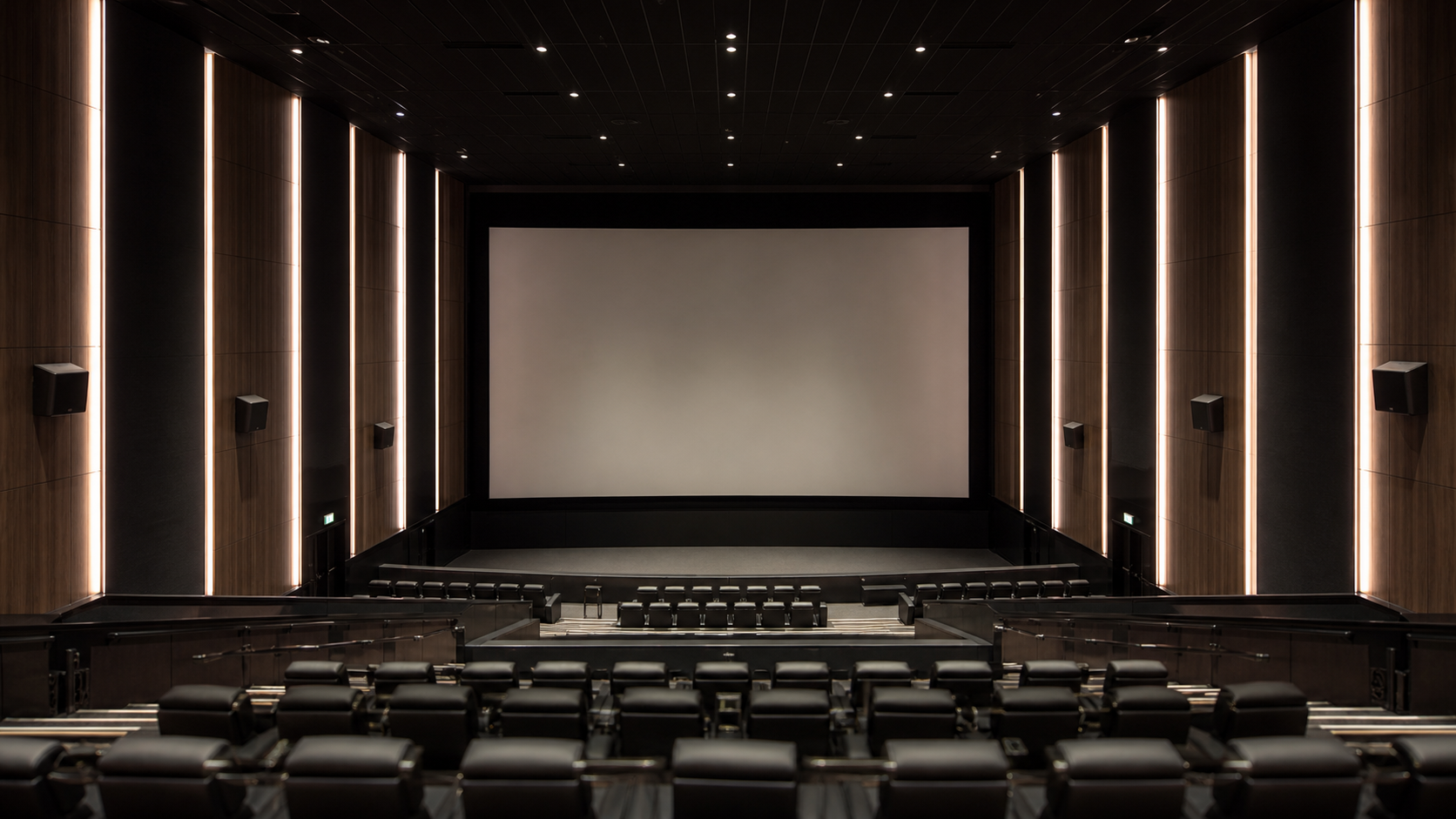
The screen size and format establish the auditorium’s visual field, capacity and spatial proportion. Flat-screen auditoria are commonly resolved as rectangular or subtly tapered rooms with a controlled floor rake; specialist formats require their own geometry from the first planning stage.
Start with volume, then tune the reflection paths.
These planning values are a useful first check before modelling. The final design must be validated against programme, occupancy, loudspeaker system and applicable local codes.
≤ 30 mRecommended maximum auditorium length
1.3–1.7 : 1Indicative length-to-width ratio
6.0–8.0 m³Indicative room volume per seat, including screen volume
04 / ACOUSTIC CONTROL MAP
Give direct sound room to arrive. Treat the energy that returns too late.
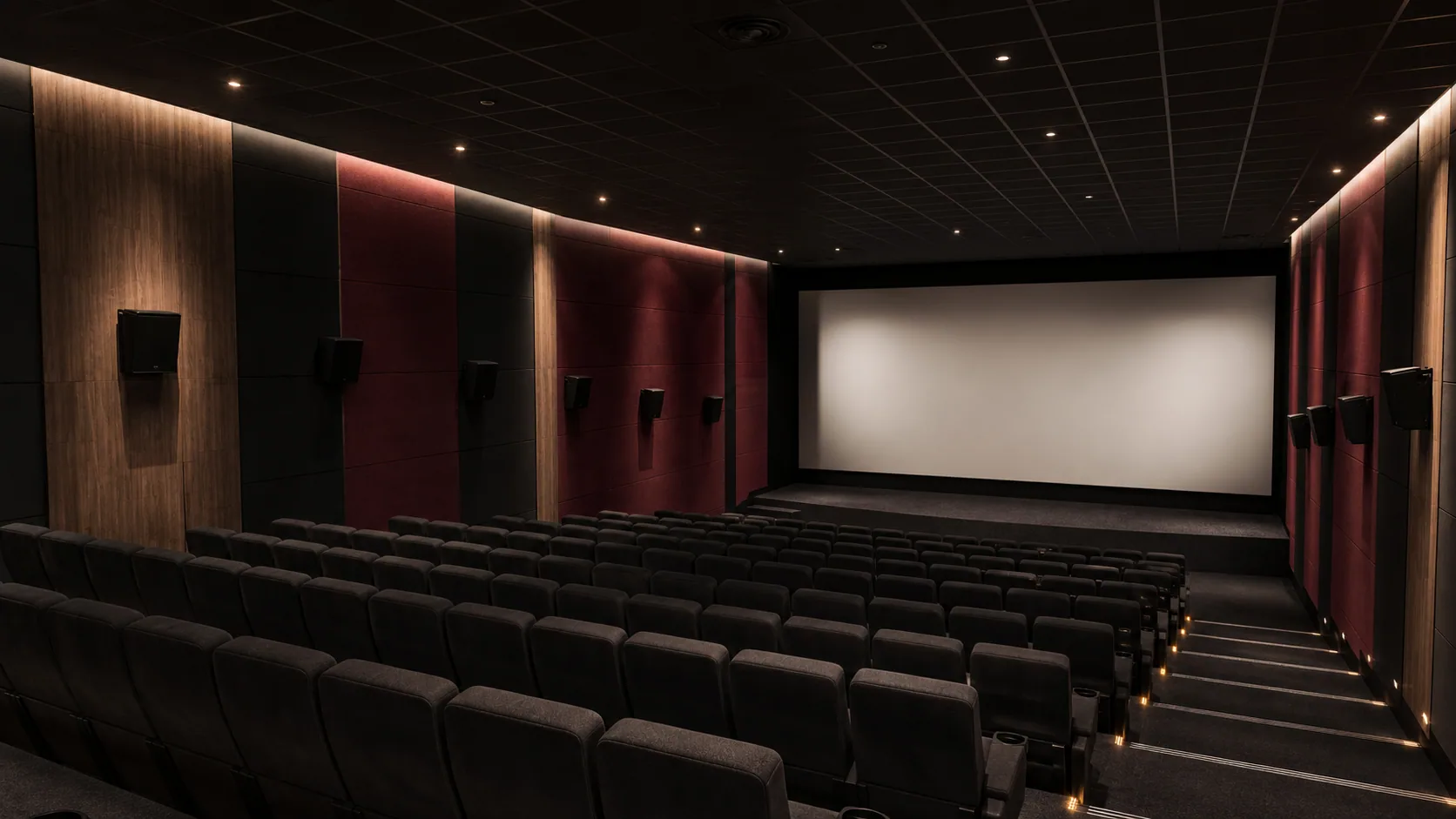
Auditorium performance depends on the whole envelope: the screen wall, side reflections, ceiling, rear wall, loudspeaker mounting and technical adjacencies all contribute to perceived detail.
A
Side walls
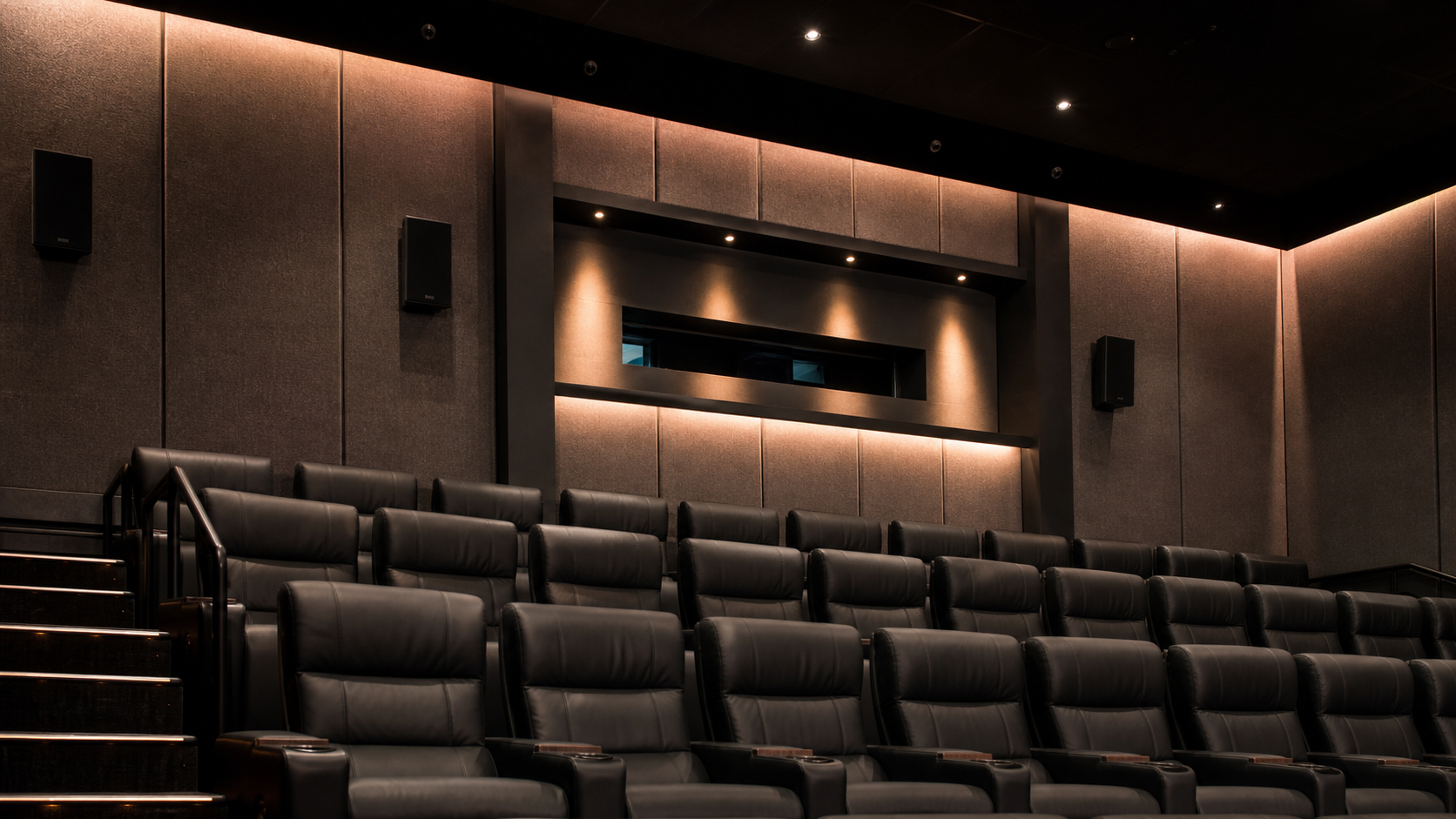
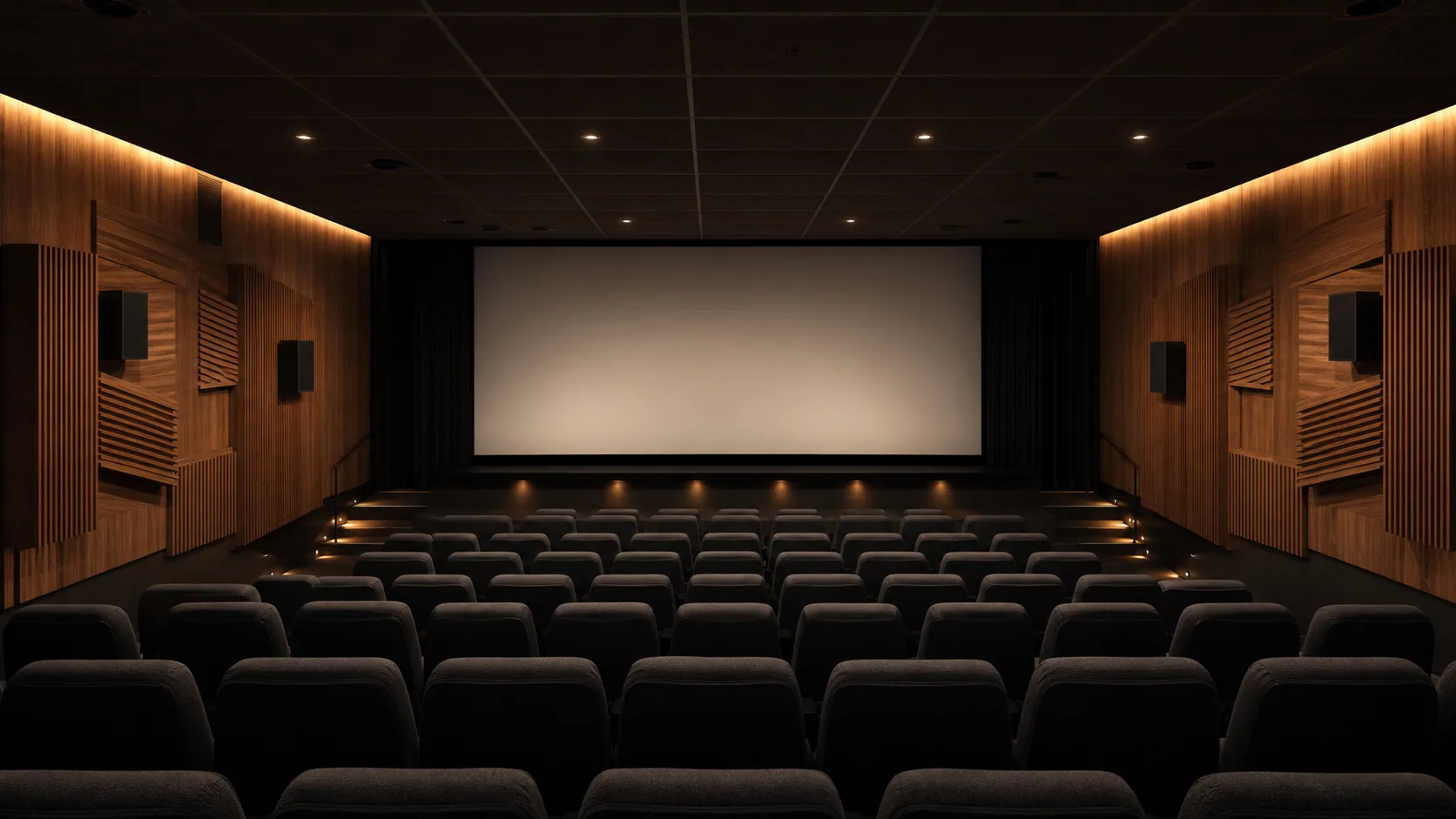
Prevent flutter and manage lateral reflections with a calibrated mix of absorption and diffusion.
B
Ceiling plane
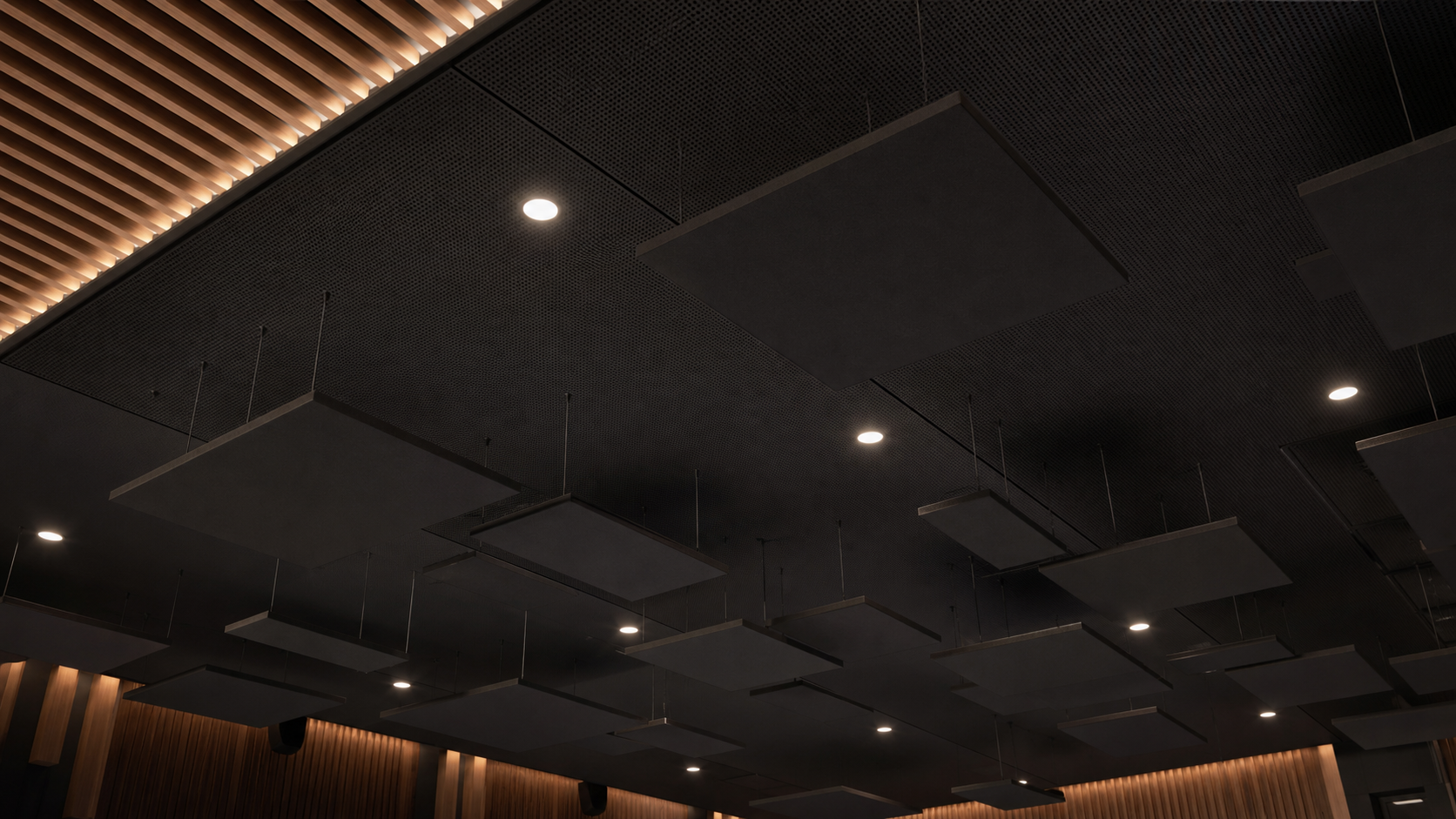
Use controlled absorptive coverage to limit late overhead energy without losing visual depth.
C
Rear & speaker zones
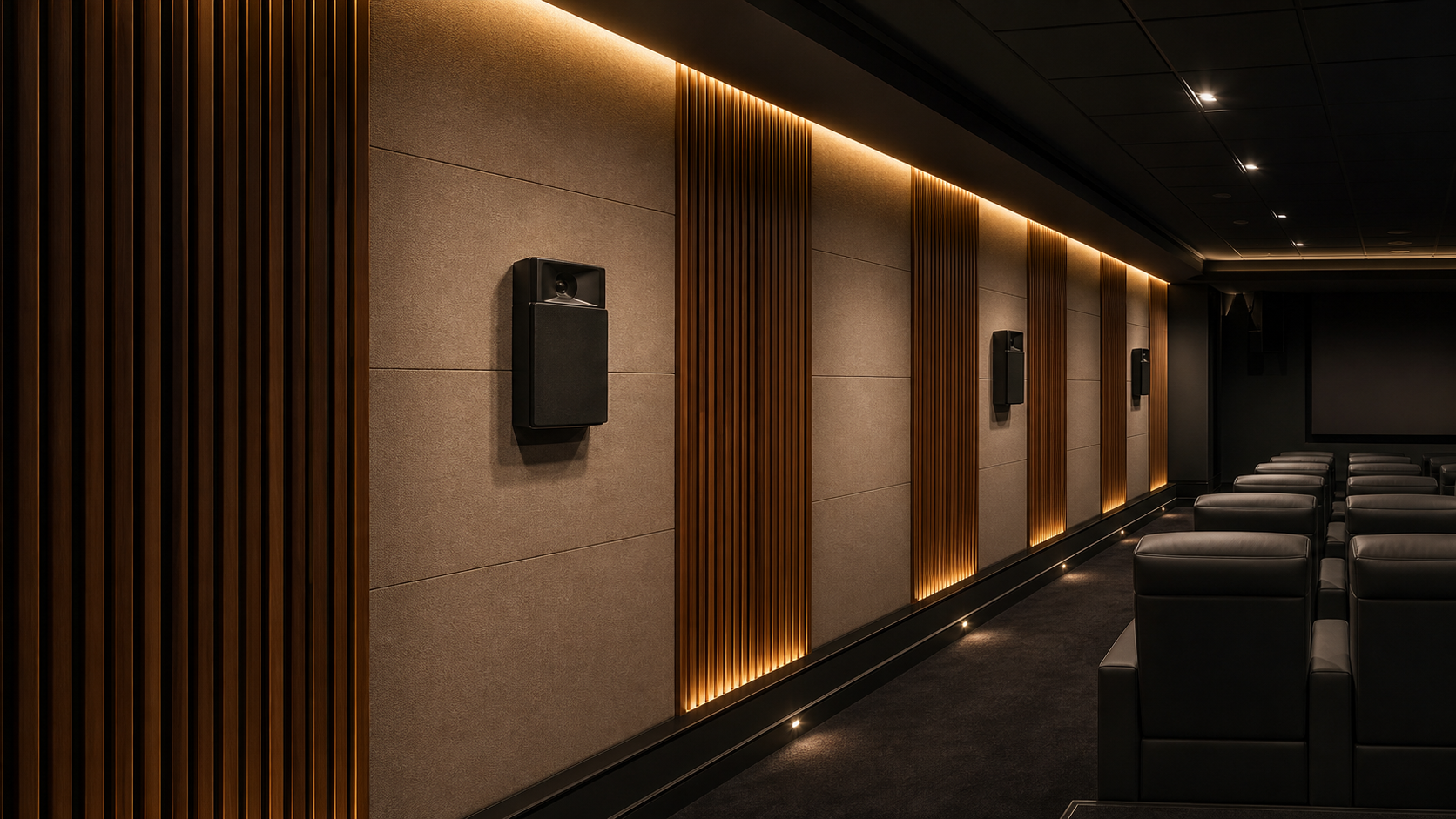
Provide strong absorption behind loudspeaker groups and at the rear wall; isolate mounting details from vibration.
05 / REVERBERATION TIME
Balance the spectrum, not only the average.
Use the 500–1,000 Hz band as the central reference, then assess reverberation at 125, 250, 500, 1,000, 2,000 and 4,000 Hz. Small stereo cinemas below 500 m³ may use the 500 m³ reference range as an initial guide.
Illustrative design reference derived from the supplied material. Confirm the target and test method with the appointed acoustician and governing standard.
Relative reverberation time
125 Hz1.0–1.2
250 Hz1.0–1.1
500–1,000 HzReference band
2,000 Hz0.9–1.0
4,000 Hz0.8–1.0
06 / MATERIAL PALETTE
Performance, expressed as architecture.
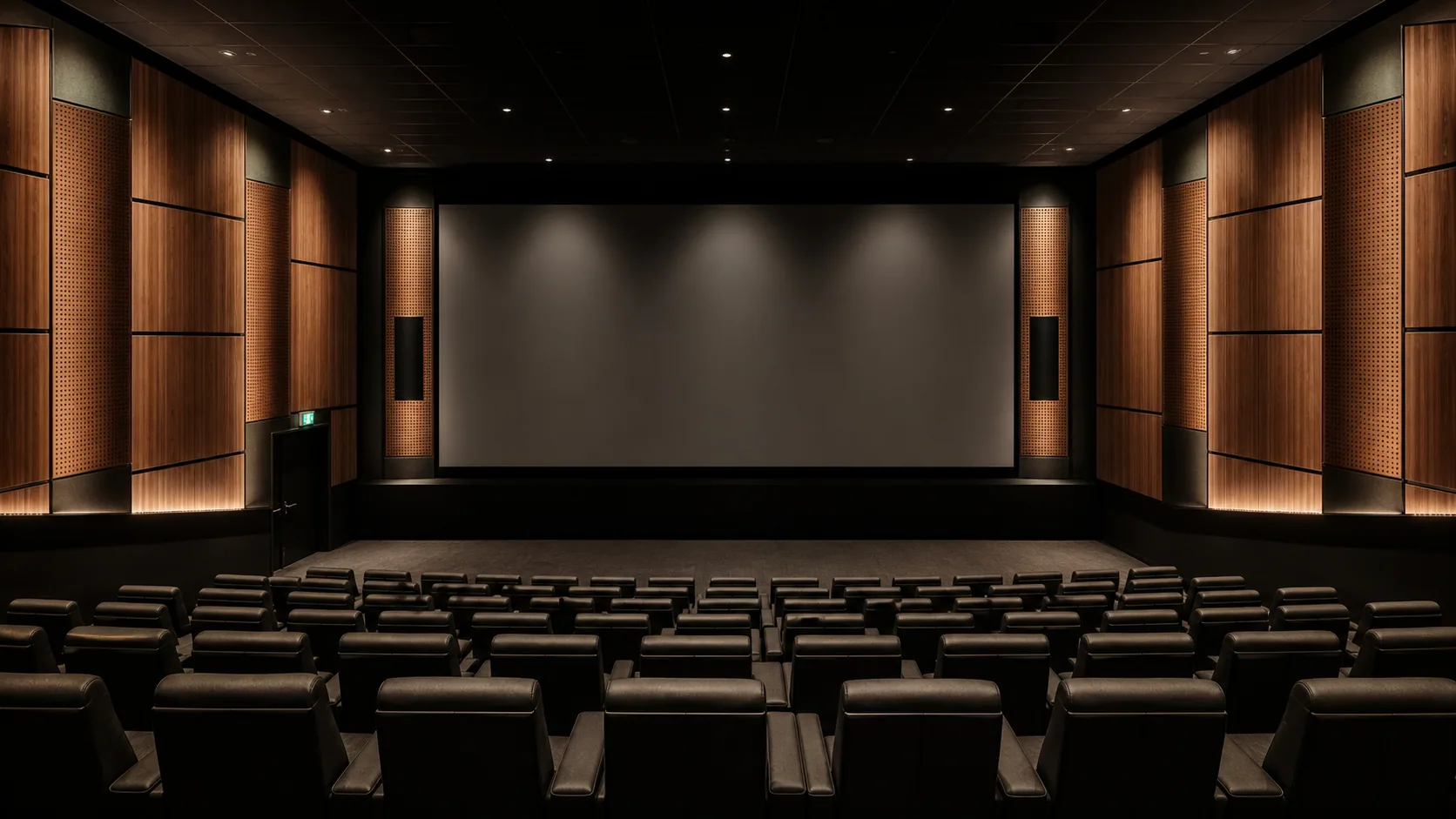
JHS combines acoustic performance with production-ready finish selection. The right composition is project-specific, but cinema schemes commonly layer timber acoustic panels, concealed polyester absorption, fabric-faced broad-band treatment and isolated lining assemblies at sound-sensitive boundaries.
Perforated or grooved wood wall panels for visible architectural zones
Concealed polyester absorption at screen, rear and deep-cavity areas
Fabric acoustic panels for broad-band side-wall control
Isolated construction where noise transfer must be contained
Material and mood references for project discussions. Images are visual studies, not representations of completed JHS projects.
MAKE THE ROOM WORK HARDER
Bring us the room. We will build the acoustic direction.
Send the room plan, intended use, capacity, screen format and finish ambition. We will help define the panel system and acoustic layout for your next cinema project.